The Art of Trailer Music Composition: Crafting Cinematic Impact in 60 Seconds
Walking into a darkened edit suite with a fresh cut of a two-minute trailer, I remember the first time I heard a temp track that just would not let go. The producer had dropped in a Hans Zimmer cue from a blockbuster, and the picture suddenly breathed. That moment taught me something crucial: trailer music composition is not just about writing a good piece of music. It is about compressing an entire emotional arc into a window that rarely stretches past ninety seconds. Every transition, every riser, every hit point has to land with surgical precision.
Over the years working in a Los Angeles-based audio post-production studio, I have sat beside composers, sound designers, and film trailer editors who treat this craft like a high-stakes puzzle. The tools have evolved, Pro Tools sessions now spill across multiple monitors, and Dolby Atmos mixes demand a level of spatial awareness that did not exist a decade ago, but the core challenge remains the same: how do you make a stranger care about a story they have not seen yet?
The Hybrid Orchestration Sweet Spot
One of the first realities of trailer music composition is that pure orchestral scoring rarely works alone. The audience has been conditioned by years of epic fantasy and sci-fi campaigns to expect a blend of acoustic power and electronic grit. Hybrid orchestration is the term we use for that blend, and it is everywhere in modern trailer libraries. A string section from the Berlin Orchestra might sit under a distorted synth bass, while a processed piano loop provides rhythmic drive. The trick is making those elements feel like one instrument, not a patchwork.
I recall a session where we were scoring a dark fantasy spot. The director wanted something that felt ancient but aggressive. We started with a live cello recording, then layered it with a sub-bass patch from a library we had customized years earlier. The cello gave it humanity; the sub gave it weight. That kind of balance is what separates professional work from amateur experiments. Sample logic matters here, knowing which articulations to trigger and when to let a real player breathe over a sampled bed can make or break a cue.

Sound Design as a Musical Element
In many ways, trailer music composition borrows heavily from sound design. A well-placed Foley art element, the scrape of metal, the crunch of gravel, can function as a percussion hit. I have taken recordings of a rusty gate and pitched them down to form a bass pulse. The line between music and sound design blurs intentionally. A good sound designer knows that a riser built from reversed cymbal crashes and synthesized vocal pads can create tension faster than any chord progression.
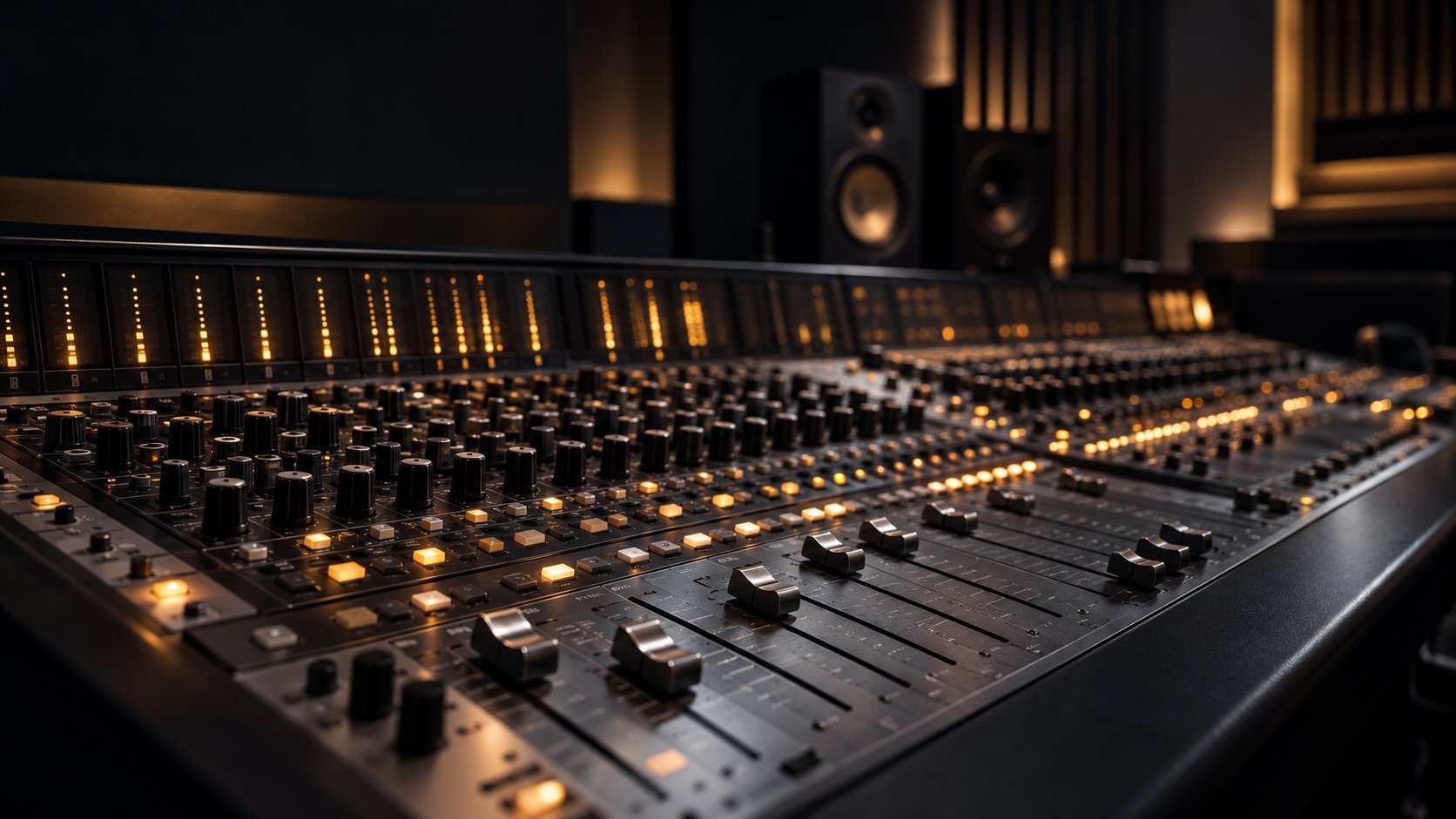
This is where the post-production workflow becomes critical. In the studio, the mixing console is the command center. We route the music stem through the same signal chain that handles dialogue and effects, because the trailer has to feel cohesive. If the music lives in a different sonic world than the sound design, the audience will sense the disconnect even if they cannot name it. Dolby Atmos adds another layer: now we can place a string melody in the front speakers while a low drone circulates around the room. That spatial storytelling is a game-changer for emotional immersion.
The Business of Sync: Libraries and Licensing
Not every trailer composer works directly with a film studio. Many of us build catalogs for trailer music libraries, which then license tracks to editors and agencies. A synchronization license is what allows a piece of music to be married to a piece of picture. If you write for a library, you are essentially creating stock music for a very demanding market. The bar is high. A generic cue will not cut it when a film trailer editor is scrolling through thousands of tracks on a platform like Spotify for sync, looking for that one piece that makes the protagonist's eye twitch feel heroic.
I have spent afternoons browsing through Boom Library collections and commercial trailer music library sites, studying what works. The best cues have clear structural markers: a soft intro, a building middle, a peak that can land on a specific frame. Editors love tracks with obvious hit points, moments where the music can lock to a cut or a reveal. Writing without those markers is like handing a carpenter a board with no markings. You might have beautiful wood, but nobody knows where to saw it.
There is also the role of the music supervisor in this chain. They are the ones who pitch your track to the creative team. Building a relationship with a sync licensing agency or directly with supervisors can open doors, but it takes patience. I remember sending a demo to one agency and hearing back six months later. They used it in a spot for a major franchise, and that one placement led to a series of briefs. Persistence matters more than perfection in this business.
Practical Realities of the Studio
Working with Pro Tools day in and day out, I have learned that template design is half the battle. A well-organized session with labeled tracks, color-coded buses, and a consistent routing scheme saves hours when you are under deadline. The mixing console in Pro Tools becomes a map of your decisions. I keep a master template that includes a stereo mix bus with light compression, a reverb send to a convolution reverb loaded with a hall impulse from a famous scoring stage, and a parallel compression chain for drums. That setup lets me get to a rough mix quickly without losing the feel.
Sample logic is another area where experience shows. When I use a library like Berlin Orchestra, I do not just load a patch and play. I think about velocity layers, round-robin cycling, and how the instrument responds to legato vs. staccato. A string patch that sounds robotic in a solo passage can be glorious when layered with a live player or another sampled section. The judgment call is knowing when the sample is doing its job and when it needs help. No amount of processing can fix a sample that does not match the articulation you need.
Working with the Picture
Every film trailer editor has a different approach. Some will give you a rough cut with temp music and ask you to match the energy. Others will hand you a silent edit and ask for your interpretation. I prefer the latter because it lets me build the music from the narrative rather than from someone else's temp. Hans Zimmer once said in an interview that music should not follow the picture, it should lead it. That stuck with me. In trailer music composition, leading the picture means anticipating the emotional beats before they happen on screen. The music tells the audience how to feel, and the editor cuts to that feeling.
One practical technique I use is to map the trailer's story beats on a timeline. I mark the intro, the conflict, the low point, and the climax. Then I write a simple sketch that follows that arc. Often the climax needs a sustained note or a sudden silence before the final hit. Silence under a Dolby Atmos mix can be louder than any instrument if used right. The audience leans forward in that gap, and then the next sound hits them twice as hard.
The Human Element
At the end of the day, all the hybrid orchestration, sample logic, and sync licensing agency relationships are just tools. The real skill in trailer music composition is empathy. You have to feel what the audience will feel in a darkened theater, watching a two-minute preview at full volume. You have to know when a melody is too sentimental and when it is just right. You have to trust your instincts and be willing to scrap three days of work because the picture changed.
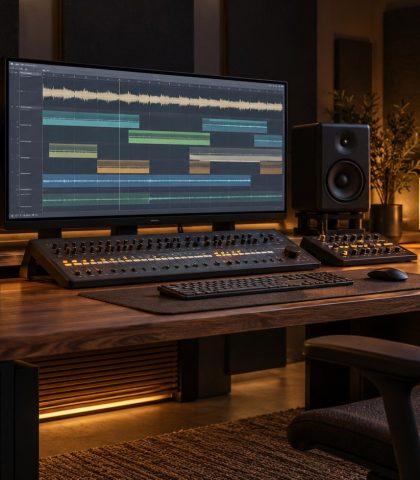
I have seen composers burn out chasing the perfect trailer cue. The ones who last are the ones who stay curious. They listen to music outside their comfort zone. They attend live orchestral performances. They spend time with sound designers and Foley artists, learning how a footstep in gravel can become a rhythmic element. The best trailer music does not sound like it was assembled in a DAW. It sounds like it was born in a room full of people who love stories.
If you are starting out, build a small catalog of three or four solid cues. Put them on a demo reel. Reach out to music supervisors directly, not through cold emails but through shared connections or industry events. Do not underestimate the value of a good sync licensing agency. And when you finally hear your music in a trailer, sitting in a theater and feeling the audience react, that moment makes every late night worth it.